
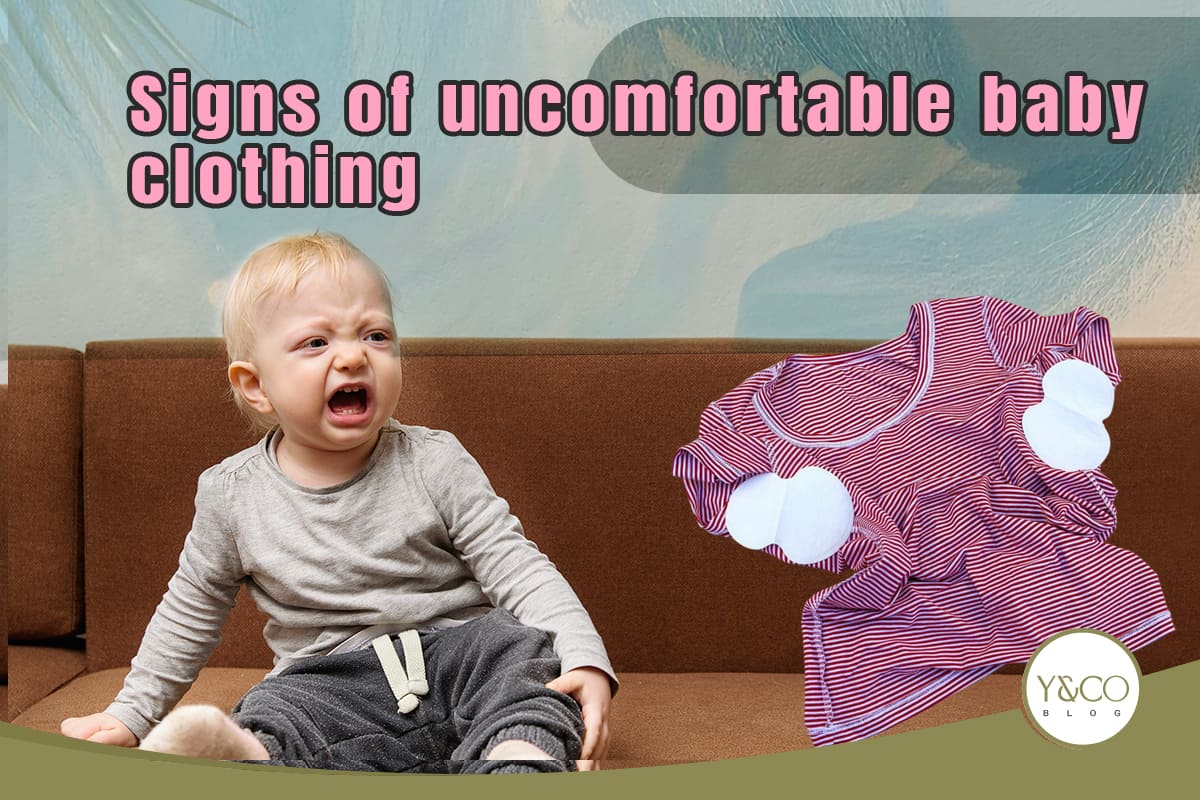

Every parent has been there. Baby was fine, you put an outfit on, and suddenly everything falls apart. Those meltdowns might not be random. Knowing the signs of uncomfortable baby clothing means you can stop guessing and actually fix what’s wrong before the whole day goes sideways.
In This Article
Most babies hate getting dressed. They squirm, they cry, they try to crawl away the moment they see you coming with a fresh outfit. But sometimes, after you’ve wrestled them into their clothes, they keep fussing in a way that feels different.
Some babies pull off their socks repeatedly, scratch at their sleeves, or stay cranky for no clear reason. They’re not just being fussy. They’re telling you something about their clothes that feels wrong.
That extra irritability isn’t always just a phase. Sometimes those cute little pants are digging into their waist, or that adorable sweater has a seam rubbing against their skin all day long.
This guide walks you through the signs of uncomfortable baby clothing, what’s actually causing the problem, how to tell the difference between regular fussiness and a clothing issue, and what simple changes will keep your baby comfortable from morning to bedtime.
Why Baby Skin Gets Irritated So Easily

Baby skin works completely differently from adult skin, and understanding this difference can save you a lot of frustration. While adult skin has built up defenses over years of exposure, baby skin remains paper-thin and incredibly sensitive to everything it touches. Rough seams, tight elastic bands, and even the chemicals used to treat new fabrics can cause real discomfort that adults would never notice.
Temperature control is also tough for babies. Babies can’t adjust their body temperature the way adults do, which means they overheat or get chilled much more easily.
That adorable thick sweater might be trapping too much heat, while those lightweight pajamas could leave them uncomfortably cold all night.
As babies develop and become more aware of their surroundings, they often start reacting to clothing issues that didn’t seem to bother them when they were younger.
This explains why an outfit that worked perfectly for months might suddenly trigger fussiness – it’s not that the clothes changed, but that your baby’s awareness has grown.
Physical Warning Signs to Watch For
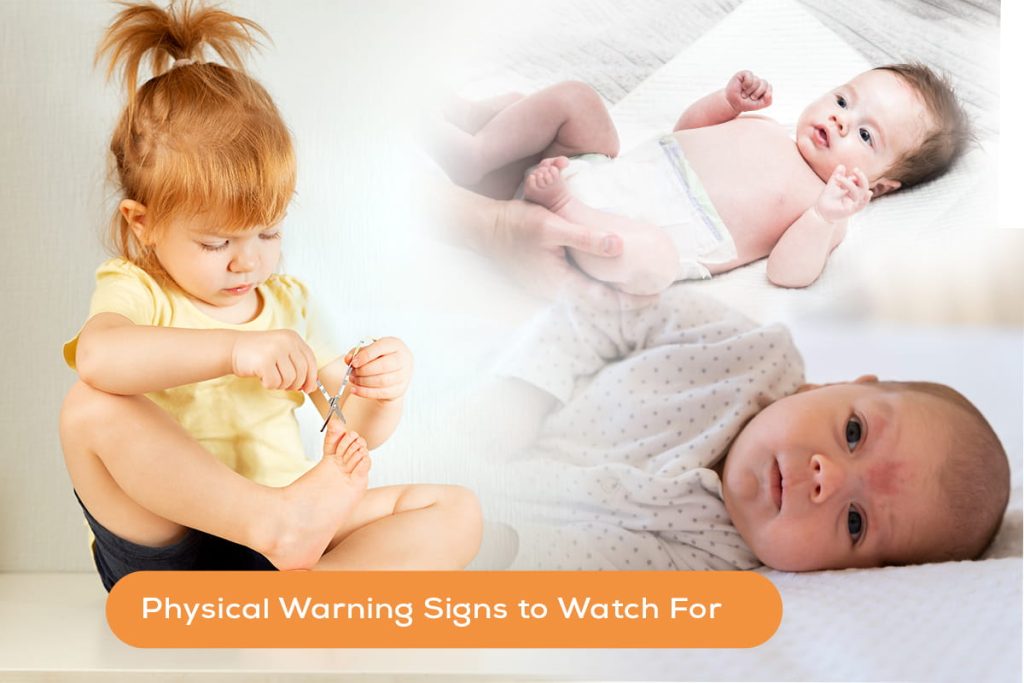
Red Marks After Taking Clothes Off
The easiest way to spot clothing problems is by looking at your baby’s skin. Red marks are the most obvious sign that something isn’t right. These might show up around the wrists from too-tight sleeves, around the waist from snug pants, or around the neck from fitted shirts.
When you’re changing your baby, take a quick look at their skin where the clothes were sitting. Every diaper change is a good chance to check your baby’s skin. Light pink marks that disappear in a few minutes are usually nothing to worry about. But if you’re seeing deeper red marks that are still there 10 or 15 minutes later, the clothes are too tight, plain and simple.
Checking Around Wrists, Ankles, and Waistbands
Elastic is usually the first troublemaker. Wristbands, ankle cuffs, and waistbands can all dig in without you realizing it. A quick test: try sliding your finger under the elastic. If you have to force it, your baby is probably feeling that same tightness all day.
Rashes and Skin Irritation
Little bumps, rough patches, or red irritated skin are worth paying attention to. You’ll usually spot them in places where fabric keeps rubbing the same spot, like under the arms, around the neck, or right where the diaper edge meets the clothing. Sometimes you’ll even see faint scratch marks from a rough seam or a fabric that’s just too coarse for delicate baby skin.
Temperature-Related Signs
Get in the habit of feeling your baby’s skin throughout the day. If their neck or back feels hot and sweaty, the fabric is probably holding in too much heat. And if their hands, feet, or torso feel cold even when they’re dressed in something warm, the material simply isn’t keeping them comfortable the way it should.
Swelling Around Tight Clothing
Take a close look at your baby’s wrists, ankles, and anywhere elastic sits against their skin. If the skin looks puffy just above or below where the clothing grips, that’s a sign that things are too tight and need to be changed right away.
Signs That Need Immediate Attention
Pale or white skin around a tight area means blood flow is being restricted, and that needs to be dealt with immediately. Also watch for raised bumps, scratch marks, or irritated patches anywhere seams or tags are making contact with the skin.
Quick Daily Checks During Diaper Changes
Diaper changes and bath time are the easiest moments to look your baby over. Check under the arms, around the neck, and anywhere fabric sits close to the body. A few seconds of looking can catch irritation before it turns into a bigger problem.
How Babies Show Their Clothes Bother Them
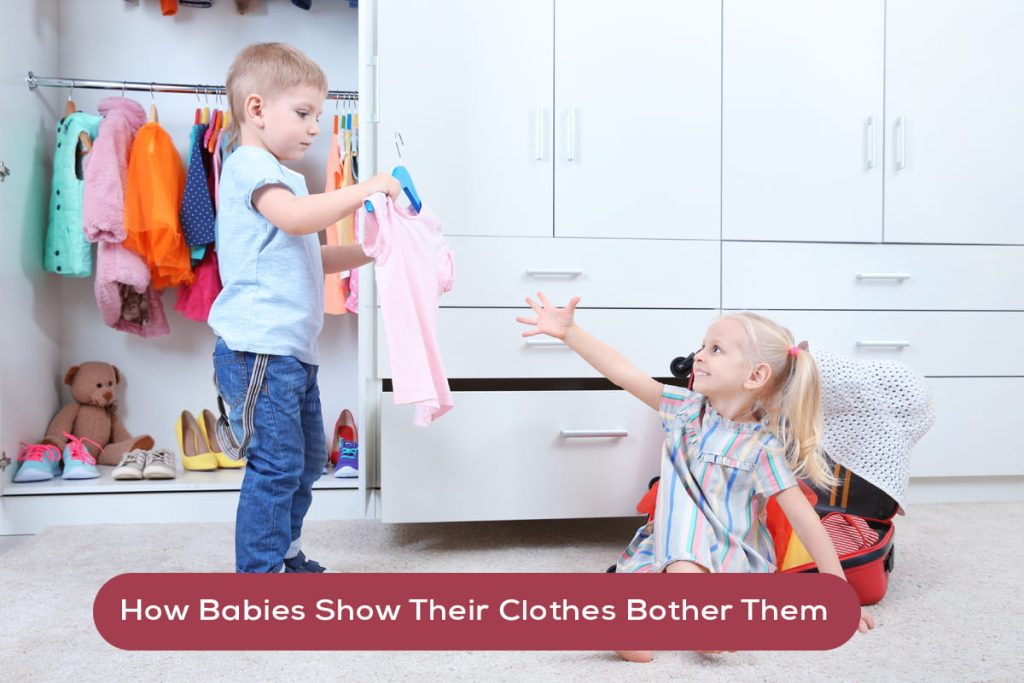
Babies have no words yet, but they absolutely find ways to let you know when something feels wrong.
Immediate Crying When Getting Dressed
Pay attention to when the crying starts. If your baby was perfectly content and then suddenly melted down the moment you put on a specific outfit, that’s not a coincidence. The clothing is most likely what set them off.
Fighting You During Dressing Time
Watch for babies who arch their backs when you try to put certain clothes on them, or who seem to fight you more during dressing time with specific items. Some babies will actually try to pull at their clothes or scratch at areas that bother them.
Sleep Disruptions
If your baby suddenly starts sleeping badly, their clothes might be the problem. Maybe that new pajama top has a scratchy seam, or the pants are too tight around the belly. Sometimes what feels fine during the day becomes annoying at bedtime.
Signs at Different Ages
Babies show discomfort differently as they get older. Little babies mostly just cry when something bothers them. Older babies might keep pulling off their socks or try to wiggle away when they see certain outfits coming.
When Toddlers Can Tell You
Toddlers can actually start to tell you what’s wrong. They might say “itchy” or “tight” or simply refuse to wear certain items. When older babies consistently reject specific pieces of clothing, it’s worth paying attention to their preferences.
Choosing Clothes Your Baby Will Like
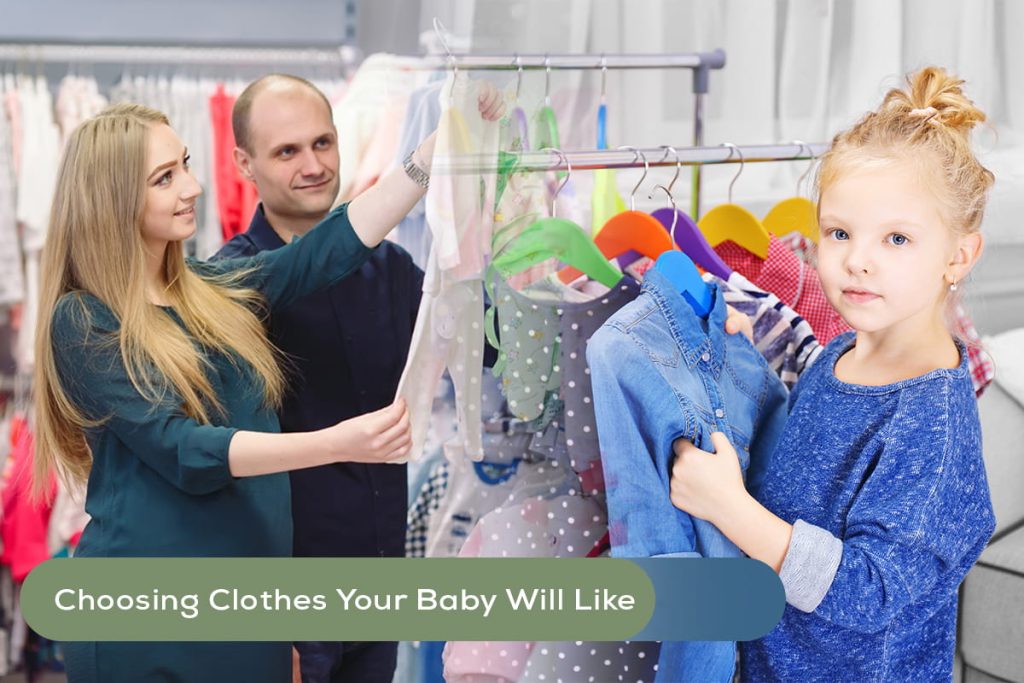
Choosing the right clothes from the start prevents most problems before they happen. The fabric really matters for keeping your baby comfortable.
Best Fabrics for Baby Comfort
Organic cotton works well for most babies since it hasn’t been treated with harsh chemicals. It’s soft, allows air to move through it, and gets softer with each wash. Avoid synthetic fabrics like polyester for everyday wear, especially for sleep clothes, since they can trap heat and moisture. Bamboo fabric is another good option that stays cool and feels silky smooth against delicate skin.
Getting the Size Right
Sizing is honestly all over the place with baby clothes. A 6-month size from Mothercare can fit completely differently from a 6-month size from H&M, so going by the age label alone will get you into trouble.
If you’re shopping from brands common in the UAE, like Y&CO, Babyshop, Mothercare, or Centrepoint, keep in mind their sizing tends to run on the smaller side. Going up a size is usually the safer call. Brands like Carter’s or Next tend to fit closer to what the label actually says.
Before buying, look for the size chart on the label or packaging. Measure your baby’s chest, length, and weight, then match those numbers to the chart. And if your baby sits right between two sizes, always go with the bigger one.
Reading Clothing Labels
Look for “100% Cotton” or “Organic Cotton” in the fabric content section. Check if it says “Pre-shrunk” so clothes won’t get smaller after washing. Labels that say “Tagless” or “Printed Label” are better than sewn-in tags that can scratch. Avoid anything that says “Flame Resistant” for everyday clothes, as these treatments can irritate sensitive skin.
Helpful Features to Look For
Wide necklines or envelope shoulders make getting shirts on and off much simpler without stretching the fabric over your baby’s head. Snap-bottom onesies are easier than pullover shirts, especially during diaper changes. Two-way zippers on sleepers let you change diapers without undressing your baby completely, which is especially helpful during nighttime changes.
What to Avoid
Skip clothes with rough seams, especially ones that sit right against skin. Many baby clothes now have flat seams or are made seamlessly, which feels much nicer. Stay away from clothes with small decorative items like buttons, bows, or rough patches that could irritate skin. While these might look cute, they’re not worth making your baby uncomfortable all day.
Washing New Clothes Before Wearing
Always wash new clothes before your baby wears them for the first time. Fresh off the shelf, they can carry manufacturing chemicals and finishes that irritate sensitive skin. A wash also softens the fabric up nicely.
Stick to a gentle, fragrance-free detergent and skip the fabric softener entirely. It might seem like it would help, but it can actually reduce absorbency and cause irritation on delicate skin.
FAQs
How to know when a dress is too tight?
Check for red marks on your baby’s skin after removing the dress. If marks don’t fade within 10 minutes or you can’t slip a finger under the seams, it’s too tight.
What happens if a baby wears tight clothes?
Babies get fussy, develop rashes, and may have trouble sleeping. Very tight clothes can also reduce blood flow and cause swelling around wrists or ankles.
How do I know if my baby is tight?
Your baby will cry when getting dressed, keep pulling at their clothes, or seem unusually cranky. Look for red marks on their skin during diaper changes.
Do tight clothes loosen over time?
No, baby clothes don’t stretch much. Cotton and most baby fabrics stay the same size, and your baby keeps growing, making clothes even tighter.
Can you make a tight dress looser?
Not really. You can’t add fabric that isn’t there. It’s better to save the dress for a smaller baby and buy the next size up.
Once you know what to look for, those fussy moments start making sense. Recognizing the signs of uncomfortable baby clothing early means your baby wasn’t just being difficult – maybe their clothes were actually bothering them.
Babies who are comfortable in their clothes often reach developmental milestones faster. When they’re not distracted by scratchy seams or tight waistbands, they can focus on learning to roll over, sit up, or grab toys.
Babies also remember which clothes feel good and which don’t. If you keep putting them in something uncomfortable, they’ll start crying the moment they see that outfit coming. When you find clothes they like, getting dressed becomes much easier.
Small changes like this can make parenting feel a lot more manageable.

Leave a Reply