

Winter clothes that cost hundreds of dirhams often turn yellow, smell musty, or get eaten by bugs after just one summer in UAE storage. The extreme humidity, dust storms, and temperature swings here require completely different storage methods than what works in other countries.
In This Article
Winter clothes that cost hundreds of dirhams often come out of storage looking terrible. Sweaters get yellow stains. Jackets smell bad even after washing. Many UAE families face this problem. You buy nice winter clothes for your kids. You store them during the summer. Then you find them ruined when winter comes back.
Winter in the UAE is short – only about two months. But those warm clothes sit in storage for 10 months. That’s a very long time. During those months, many things can go wrong. The air gets very humid. Dust gets everywhere. Bugs might eat your expensive sweaters.
Many parents think How to Store Seasonal Kidswear is easy. Just clean them and put them in boxes, right? But the UAE weather makes it much harder. Tips from other countries don’t work here.
This guide will help you store your kids’ winter clothes properly. They will look good when you take them out again. You’ll learn which boxes work best here. You’ll know how to keep bugs away safely. You’ll understand when to keep clothes and when to give them away. Best of all, these tips work for regular families with normal budgets.
Why UAE Climate Makes Storage So Difficult

The Humidity Problem
UAE gets really humid in summer. Sometimes it reaches 90%. Your closets and storage rooms become like steam rooms. Even with AC running, these spaces stay damp.
That damp feeling in your closet? Cotton and wool clothes soak up all that moisture for months. They become perfect homes for mold and mildew.
Dust Gets Everywhere
During summer, Dubai’s high temperatures and strong winds create frequent sandstorms. But most people don’t realize how that fine sand gets into everything. These storms last for days. The sand is so fine it gets through tiny gaps. It ends up inside sealed boxes, vacuum bags, and closed closets.
Your winter coats get covered in this dust. It’s really hard to clean off completely. Dark clothes show every tiny speck. Some fabrics never look the same again.
Hot and Cold Extremes
Summer here hits 45°C easily. Winter nights drop to 12°C. Your clothes keep expanding and shrinking with these temperature changes. Elastic gets loose. Delicate fabrics crack and break.
Many families store clothes in spare rooms or garages. These places get even hotter – sometimes 60°C. That’s hot enough to actually damage your clothes.
Not Enough Space
UAE homes are usually small, especially apartments. You end up stuffing winter clothes anywhere they fit. Under beds, bathroom closets, and bedroom corners. When everything is crammed together, clothes get damaged more easily. You can’t protect them properly when there’s no room.
What Actually Works for UAE Moms
Choosing the Right Containers
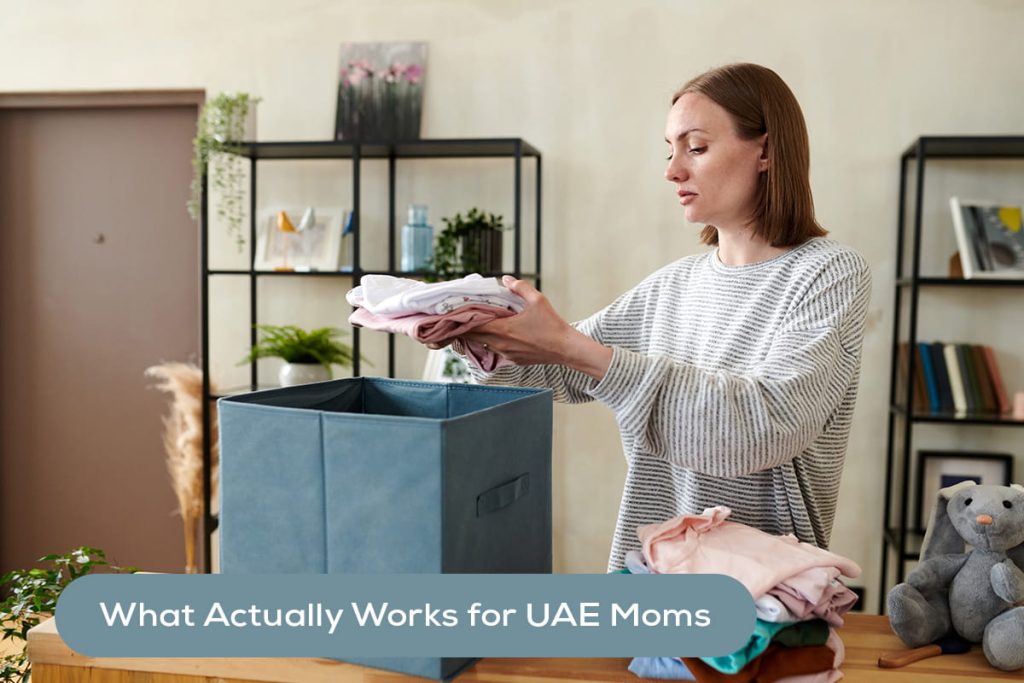
Cardboard boxes are terrible here. They soak up moisture and attract bugs. Plastic bins with tight lids work much better. Clear boxes save you from digging through everything to find one sweater.
Medium boxes are much easier to carry when you need to move them.
Vacuum bags save space for thick coats. But don’t use them for wool sweaters or delicate clothes. The pressure damages these fabrics. Many moms have ruined expensive sweaters this way.
Fighting Pests Naturally
Cedar blocks keep moths away naturally. They smell good and are safe around children. Sand them lightly every few months to refresh the scent. Home Centre and IKEA sell these.
Make lavender sachets at home. Buy dried lavender from spice shops or online. Put it in small cloth bags and add them to storage containers. It works as bug repellent and leaves clothes smelling fresh.
Avoid old mothballs. They contain chemicals that aren’t safe for kids. The smell also never leaves your clothes.
Beating the Humidity
Small dehumidifiers for closets help a lot. They remove moisture from the air quietly. Carrefour and Lulu sell them for 100-200 dirhams.
Save silica gel packets from new shoes. Buy more online and put several in each container. They absorb moisture well.
Never store clothes that feel even slightly wet. Even a little moisture causes problems for months.
Dust-Proofing Your Storage
Put expensive clothes in two bags. One bag goes inside another, then both go in the container. The double layer stops more dust from getting in.
Check container lids regularly. Small gaps let dust inside. Some people use tape around edges for better sealing.
Inspect storage areas after sandstorms. Fine sand gets into places you think are completely sealed.
When Storage Goes Wrong: Quick Fixes
Dealing with Mold on Stored Clothes
Finding mold on your stored clothes is awful. But don’t throw everything away yet – you can probably save most of it.
Take the moldy clothes outside right away. Don’t shake them inside your house, or you’ll spread mold everywhere. Brush off what you can see while you’re outside.
For white clothes, mix bleach with hot water. Let them soak for about 30 minutes. For colored clothes, use white vinegar instead – it kills mold just as well without bleaching the colors.
Wash everything twice. First time with your normal detergent. Second time, add some baking soda to get rid of any leftover smell.
If the stains are still there after all this, those clothes are probably done for. Don’t waste more time trying to save them.
Removing Musty Smells from Clothes
That gross musty smell means moisture got trapped somewhere. The good news is you can usually fix it.
Wash smelly clothes in really hot water – as hot as the fabric can handle. Add a cup of white vinegar instead of fabric softener. Vinegar kills the bacteria that’s making the smell.
Really bad smells need overnight soaking first. Use enzyme detergent in cold water before you wash them normally.
Dry everything outside in the sun if you can. Sunlight kills germs and gets rid of smells that washing might miss.
If clothes still smell bad after this, they’re probably too damaged to save.
Handling Pest Damage and Infestations
Those little round holes mean bugs found your clothes. But it can be managed.
Move damaged clothes away from everything else immediately. Put all the nearby clothes in your freezer for two days. Freezing temperatures kill bugs and any eggs they left behind
Vacuum everywhere the clothes were stored. Get into all the corners and cracks. Throw the vacuum bag away right after – you don’t want bugs crawling back out.
Wash everything that was stored nearby, even if it looks fine. Bug eggs are tiny and hard to see.
You might need to get new storage containers. Bugs can hide in small cracks that are impossible to clean properly.
Storage Tips for Every Age Group

Baby Clothes
If you’re planning another baby soon, keep the newborn stuff – they grow out of it so fast it’s barely worn. But get rid of any stains first because milk spots turn nasty yellow after months in storage.
Skip the vacuum bags for baby clothes – those delicate fabrics need to breathe.
Baby clothes are also perfect for testing your storage method since they’re small and easy to check on. Sort by size rather than season – babies don’t care about winter vs summer clothes anyway.
Toddler Clothes
Toddlers get messy. Before storing anything, check all the pockets – dried Play-Doh or forgotten snacks can attract ants to the whole storage box. That homemade stain remover (dish soap + hydrogen peroxide + baking soda) works better than expensive sprays.
Keep winter and summer clothes together by size since toddlers might still fit the same clothes next year.
This is the age when you’ll want to store the most clothes since they’re still growing predictably. Don’t bother with expensive storage solutions – toddler clothes will get messy again anyway.
School Age Kids
School uniforms get gross from all the playground sweat, so wash them in hot water before storage. Keep sports clothes separate after learning the hard way that football gear makes everything smell awful.
Those fancy school event outfits need garment bags – you’ll only use them once or twice but they’re expensive to replace.
School-age kids grow fast but not as crazy as toddlers, so you can safely store clothes for the next school year. Label everything by grade and season – it saves time when you’re rushing to find the right uniform size.
Teenagers
Let them decide what to keep. Teenagers know what they’ll actually wear better than parents do, and they’re more likely to take care of things when they’re involved.
Teen clothes take up tons of space and go out of style quickly, so be pickier about what gets stored. Most of it goes to the donation bins at Carrefour.
Teenagers can also help with the actual storage process – they’re strong enough to move heavy boxes and responsible enough to check on things monthly.
Focus on storing only the expensive pieces or items with sentimental value that might work for younger siblings.
When and How to Rotate Your Storage

Perfect Timing
Pack away winter clothes in late April when temperatures consistently stay above 35°C. Summer clothes can go into storage starting in September when the humidity begins dropping.
Don’t wait until the last minute. Storing clothes during the most extreme weather months increases the chance of damage.
Monthly Check-ins
Check stored clothes once a month during peak storage season (May through October). Look for signs of moisture, pest activity, or dust infiltration.
After major dust storms, do a quick inspection of your storage areas. Even well-sealed containers can get dust inside during these storms.
Keep a simple checklist of what you’re storing and when. Much easier to keep track of everything.
The Keep, Donate, Toss Decision
Store only clothes in excellent condition that will fit another child within two years. UAE’s rapid lifestyle changes mean longer storage periods often aren’t practical.
Donate items that are still good but won’t be needed for younger siblings. The expat community here has active buy-sell-trade groups where quality kids’ clothes find new homes quickly.
Toss anything with permanent stains, holes, or safety issues like loose buttons or worn elastic. Don’t waste space on these items.
FAQs
What is the best way to keep clothes?
Make sure they’re completely dry first. Use plastic boxes, not cardboard. Add cedar blocks to keep bugs away.
What is the best way to store unused clothes long term?
Only store what you’ll actually use in 2 years. Put silica gel packets in containers and check monthly during summer.
Is it better to store clothes hanging or folded?
Fold them. Hanging stretches clothes out, especially in our humidity. Only hang fancy dresses in garment bags.
How long can clothes be stored?
Two years max for kids’ clothes. After that, they’ve either outgrown them or the style looks old.
How to Store Seasonal Kidswear will never be simple when you live in extreme weather. But now you know what really works and what doesn’t.
Storing fewer clothes better is smarter than storing everything poorly. Pick the really good pieces. Let go of the rest. Your storage space will work much better.
Check on your stored clothes every month during summer. It takes just five minutes but saves you from nasty surprises later. Many families skip this step and regret it.
The upfront cost of good containers and cedar blocks might seem high. But compare that to replacing ruined winter clothes every year. One destroyed coat costs more than proper storage supplies.
Start small if this feels overwhelming. Pick one type of clothing – maybe just winter coats. Get the storage right for those first. Then move on to other items.
Clean everything properly before storing. When December arrives, you’ll have everything ready instead of rushing to buy new winter clothes. Clean, fresh, and exactly the right size for your kids.
Leave a Reply