

Learning how to dress your newborn for sleep doesn’t have to be complicated. Stop the 2 AM guessing game about temperature. Your baby needs simple clothing. A onesie or sleep sack is enough. Keep the room between 68-72°F. Check their chest to see if they’re comfortable. That’s all you need to know. When you understand how to dress your newborn for sleep correctly, your whole family sleeps better.
In This Article
It’s 2 AM, and your baby cries again. You’ve fed them and changed their diaper, but they stay fussy. Maybe they’re too cold? You add another layer. Still crying. Now you’re wondering if they’re too hot. You remove the blanket, then put it back on. Nothing seems right, and you feel lost about what your baby actually needs.
This confusion happens to every new mom. Your baby’s cries sound more urgent in the dark because everything is quiet. Every decision feels huge when you’re tired and trying to figure out if their outfit is causing the problem.
Many sleepless nights happen because babies are dressed wrong for sleep, but it gets easier once you know what to look for.
Getting your baby’s sleep clothes right can help everyone sleep better. We will cover sleep patterns, room setup, clothing choices, and common mistakes to avoid.
Your Newborn’s Sleep Patterns: What to Expect
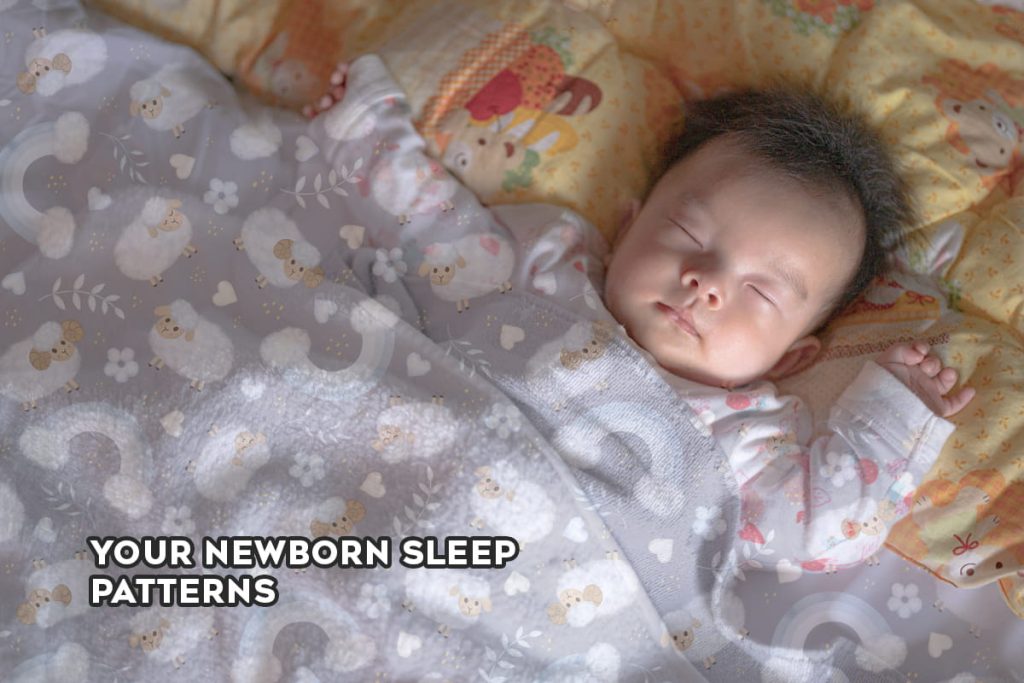
Your newborn sleeps a lot – around 16 to 17 hours each day. Many new parents get surprised because babies don’t sleep for long stretches. Instead, they wake up every 2 to 4 hours, especially for feeding.
This sleep pattern happens because your baby’s stomach is tiny. They need frequent meals to grow properly. Their sleep cycles are also much shorter than yours, which means they move between deep and light sleep more often.
Newborns can’t control their body temperature like adults do. Their little bodies are still learning how to warm up when cold or cool down when hot. This means what they wear to sleep is important for their comfort and safety.
When your baby is dressed properly for sleep, they rest better between feedings. They’re not waking up because they’re too warm or shivering from being cold. Good sleep clothing helps them (and you) get more rest during those precious sleep windows.
Before, During, and After Sleep: Your Complete Newborn Clothing Routine
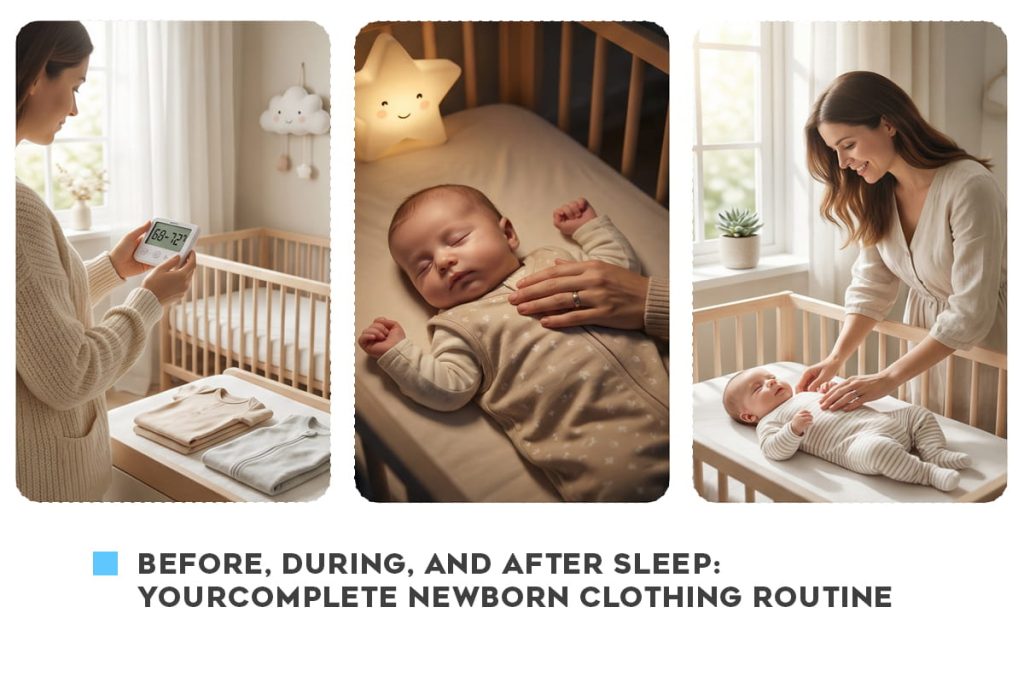
Getting ready for sleep starts before you even put your baby down. Check your room temperature with a thermometer first. The ideal range is between 68 and 72 degrees Fahrenheit. Your baby’s room should feel slightly cool to you, not warm or stuffy.
Next, choose their sleep outfit based on the temperature. Remember the “one extra layer” rule. If the room is 70 degrees and you’re comfortable in a t-shirt, your baby might need a onesie plus a sleep sack or light pajamas.
During sleep, you can check on your baby without waking them up. Feel their chest or the back of their neck with your hand. This tells you if they’re too warm or just right. Their hands and feet might feel cool, but that’s normal. Don’t use those to check their overall temperature.
Check during the night when you change diapers. Feel their chest area quickly. If they’re sweating or their skin feels hot, remove a layer for the next sleep period. If they seem cold to the touch, add something for next time.
After they wake up, take note of how they felt. Feel their chest when they wake up. If it’s warm and dry, that’s perfect. If they were hot and flushed, use fewer layers next time. Trying different things helps you learn what works best for your specific baby.
Before Sleep: Getting Ready for Bedtime
Start by checking your room temperature – aim for 68-72°F. The room should feel slightly cool to you, not cozy or warm. This prevents overheating while your baby sleeps.
Pick clothes based on the temperature and the “one extra layer” rule. If you’re comfortable in a t-shirt at 70°F, your baby needs a onesie plus either a sleep sack or light pajamas.
Get everything ready before starting your bedtime routine. Lay out their sleep outfit, have a fresh diaper within reach, and dim the lights. Bright lights keep babies awake when you want them to settle down.
Feed your baby before the final clothing change. Some babies do better with a fresh diaper too. Change them right before putting on sleep clothes.
During Sleep: Monitoring Comfort
Feel their chest or back of neck during feeding or diaper changes. Their core should feel warm but not sweaty.
Don’t check their hands and feet for temperature. They often feel cool even when your baby is comfortable. Check their chest or back of their neck instead.
If you notice sweating, flushed skin, or rapid breathing, they’re probably too warm. Remove a layer for the rest of the night. If their chest feels cool to touch, add something light like a sleep sack.
Keep nighttime interactions calm and quiet. Use dim lighting for any necessary checks or changes.Keep things quiet so they fall back asleep fast.
After Sleep: Learning and Adjusting
Pay attention to how your baby acts after waking. Content babies usually slept comfortably. Fussy babies might need warmer or cooler clothes next time. Learn from each night what works best.
Check if their clothes stayed in place and kept them covered appropriately. Sleep gowns sometimes ride up, while footed pajamas might feel too restrictive for some babies.
Notice their mood after waking. Happy babies usually slept well in the right clothes. Fussy babies need warmer or cooler clothes next time.
If your baby leaked through their diaper and soaked their clothes, try a bigger diaper size at night or use overnight diapers instead.
Remember what worked. Did they sleep longer in a sleep sack or regular pajamas? Short sleeves or long? These details help you learn what your baby likes.
Creating the Perfect Sleep Environment: Safety Tips
Crib Setup
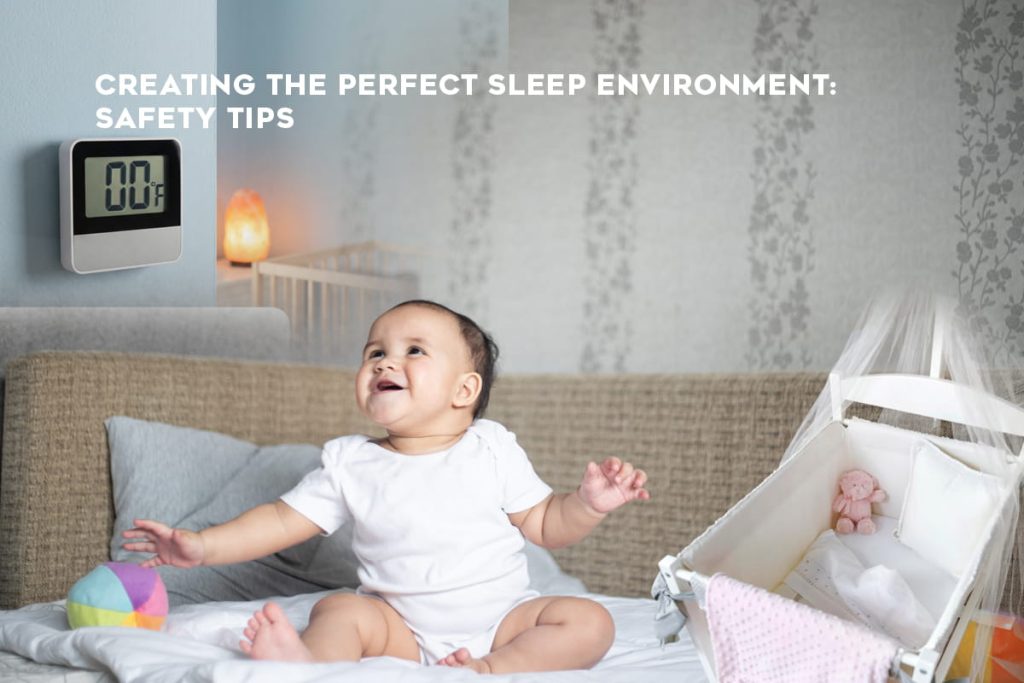
Your baby’s crib needs only a firm mattress and fitted sheet. Remove pillows, blankets, bumpers, and stuffed animals. They’re not safe.
Check that your crib is safe. Slats should be no more than 2.3 inches apart. The mattress should fit tight with no gaps.
Keep the crib away from windows and curtain cords. Don’t put it near heating vents or heaters.
Room Safety and Air Quality
Install smoke and carbon monoxide detectors near your baby’s room. Test them every month.
Make sure air moves around the room without creating drafts. If you use a humidifier, don’t point it at your baby.
Cover electrical outlets and keep cords away from reach.
While your newborn isn’t mobile yet, establishing these safety habits early prevents future accidents.
Temperature Control Equipment
Use a room thermometer instead of guessing. Adults and babies feel temperature differently. Accurate measurement prevents overheating or chilling.
A small fan helps if you don’t have central air. Place it to move air around the room, not directly on your baby.
Blackout curtains serve two purposes. They block light during naps and keep the room temperature steady.
Safe Sleep Clothing Options: What Your Newborn Should (and Shouldn’t) Wear
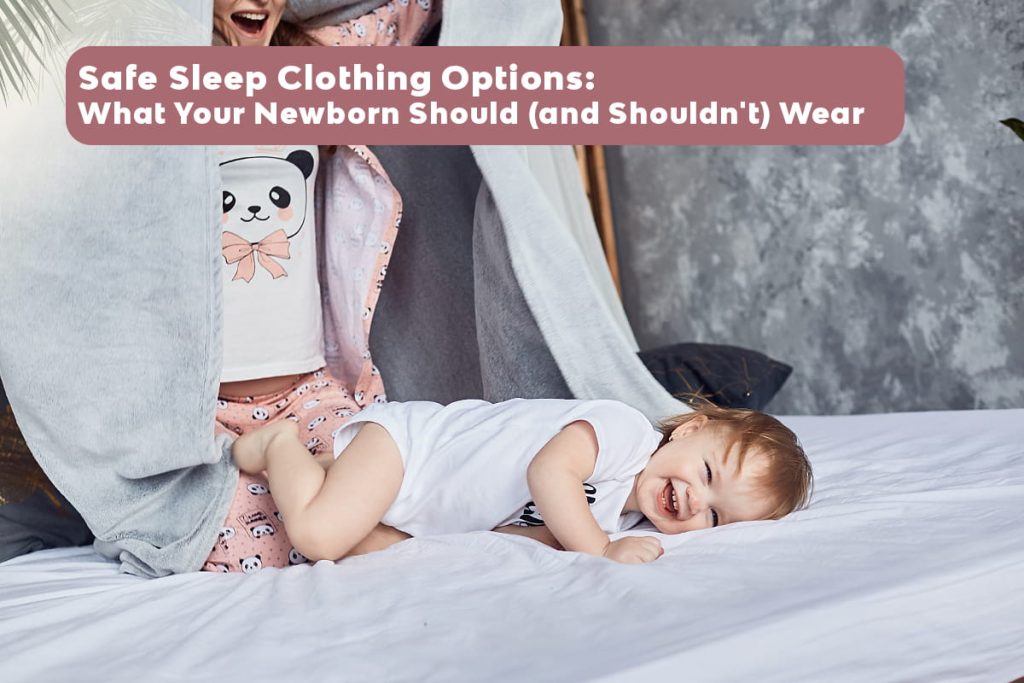
Cotton onesies work great for sleep. They’re soft and easy to change. Use short-sleeve in warm rooms and long-sleeve when it’s cooler.
Footed pajamas are a good choice too. They keep tiny toes warm without loose socks. Look for ones with snaps so you can change diapers easily in the dark.
Sleep gowns with elastic bottoms make nighttime diaper changes much easier. You don’t need to deal with snaps around legs when you’re half-asleep. Lift the gown, change the diaper, and put your baby back to sleep.
Sleep sacks are like wearable blankets. They’re safer than loose covers. Your baby feels cozy and can breathe easily.
Swaddling helps newborns sleep better. It stops them from startling awake. Use proper swaddling blankets or products made for this. Don’t make it too tight around the hips. Stop swaddling once your baby tries to roll over.
Don’t use regular blankets, quilts, or comforters in the crib. Skip hats for sleep after the first day. Babies lose heat through their heads, so hats can make them too hot.
Avoid clothes with strings, ties, or loose ribbons. Pick simple clothes that fit well. Skip decorations like beads, sequins, or buttons that aren’t safe.
Nighttime Diaper Strategy for Better Sleep
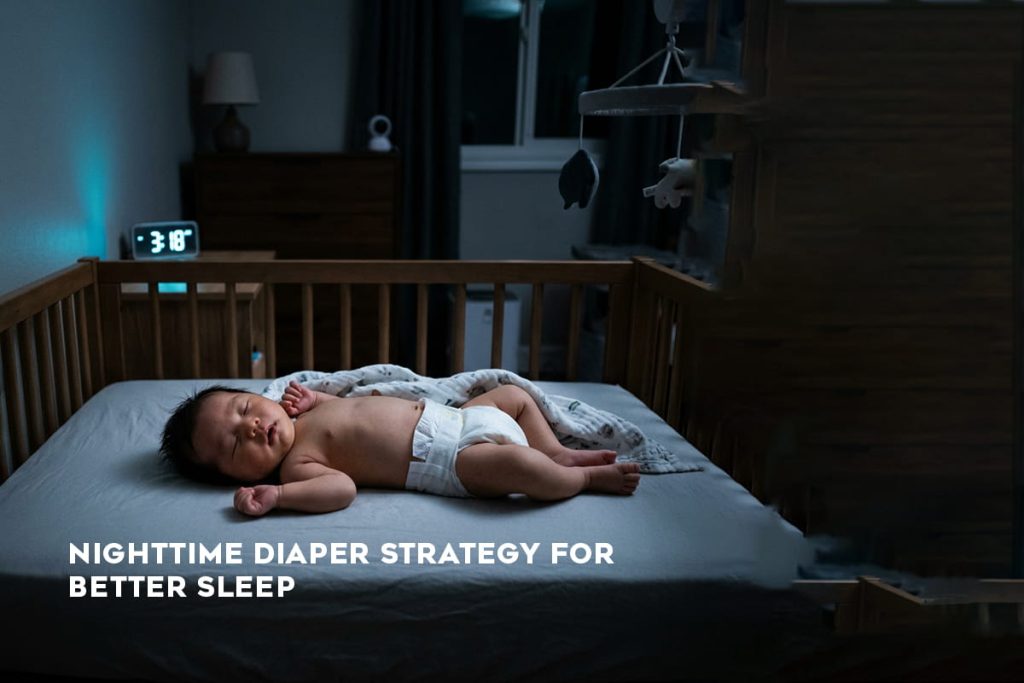
Your diaper choice affects what clothes work best for sleep. Overnight diapers hold more liquid than regular ones, which means fewer middle-of-the-night outfit changes from leaks. Popular brands like Pampers Baby Dry, Huggies Overnites, or BabyJoy work well for overnight protection that many UAE moms trust.
Try a bigger diaper at night. It stops leaks better. Your baby can move freely. Just make sure it fits snug around the legs and doesn’t gap.
When you change diapers during night feedings, try to do it without completely undressing your baby. Sleep gowns make this easy. With footed pajamas, you might only need to unsnap the bottom part.
Keep the room dim during diaper changes. Bright lights wake your baby completely and make sleep harder. Use a small nightlight or your phone’s flashlight instead. It gives enough light without waking them up too much.
Keep 8 to 10 overnight diapers in the nursery. You don’t want to run out at night. Have 2 to 3 backup outfits nearby in case of leaks. Choose something simple to put on quickly in the dark.
Some babies need diaper changes before feeding, others after. Pay attention to what works for your little one. The goal is keeping them comfortable without making them so alert that sleep becomes difficult.
5 Newborn Sleep Clothing Mistakes New Parents Make (And How to Avoid Them)
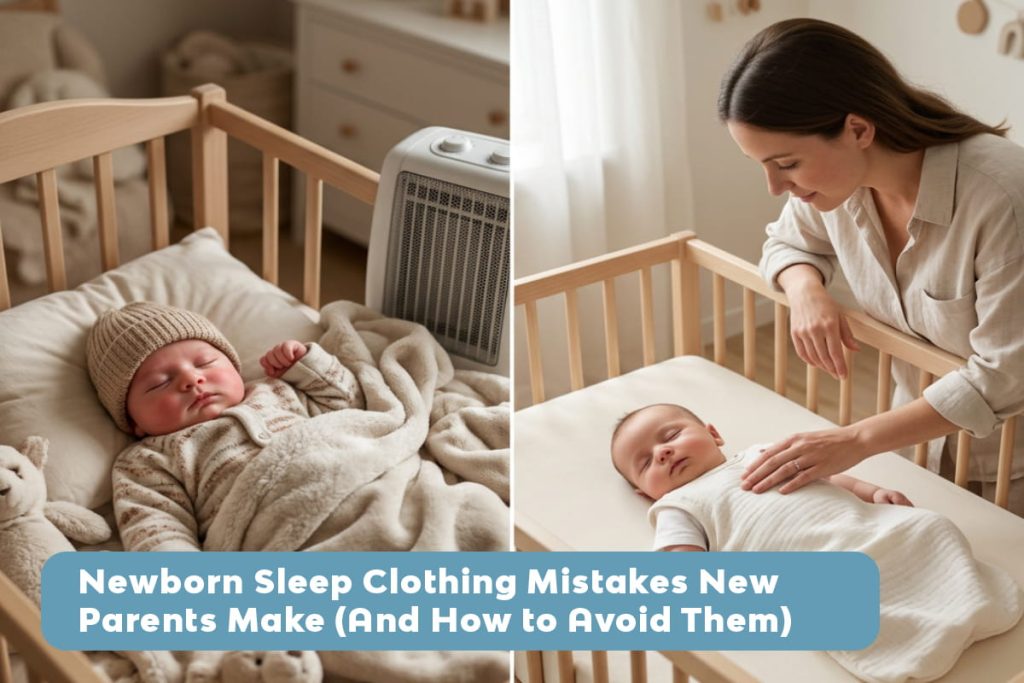
• Overdressing from worry – The biggest mistake is overdressing your baby because you’re worried they’ll be cold. Babies actually need less clothing than you might think. When you’re nervous about them being chilly, remember that overheating is more dangerous than being slightly cool.
• Using loose blankets – Using loose blankets seems natural, but it’s not safe for newborns. Those cozy quilts and soft throws need to wait until your baby is older.
• Leaving hospital hats on at home – Those little caps are cute, but babies don’t need head covering for regular indoor sleep. Their heads need to release heat, so save hats for going outside.
• Ignoring overheating signs – Ignoring signs that your baby is too warm happens easily, especially when you’re tired. Sweating, flushed cheeks, rapid breathing, or fussiness can all mean they’re overheated. If you notice these signs, remove a layer and let them cool down.
• Not using a room thermometer – Not using a room thermometer leads to guessing games about temperature. Your comfort level isn’t the same as your baby’s needs. A simple digital thermometer takes the guesswork out of deciding what they should wear.
Many parents also make clothing changes too complicated. Simple outfits work better than elaborate layering systems. When you’re changing diapers at 3 AM, you’ll appreciate clothes that are easy to work with.
FAQ
How long is a good sleep for a newborn?
Most newborns sleep for 2-3 hours at a time. They’re not ready for long nights yet – their bellies are too small!
Can I let my newborn sleep 5 hours?
If your baby is healthy and gaining weight, 5 hours is fine. Some babies naturally sleep longer stretches. Lucky you if yours does!
What are the 5 stages of newborn sleep?
Babies go through drowsy, light sleep, deep sleep, very deep sleep, and dream sleep. You might see them twitch or smile – they’re just cycling through these stages.
What should a newborn wear while sleeping?
A basic outfit like a onesie or simple pajamas. Add a sleep sack if it’s cool. Keep it easy and safe.
What is the 5 3 3 rule for baby sleep?
It’s 5 hours before the first wake-up, 3 hours between feeds, and 3 hours awake time max. But your baby’s signals matter more than rules.
At the end, when your baby sleeps well, their little brain gets to do important growing work during those quiet hours. All those connections they need for learning and development happen while they rest. When they’re comfortable and not fighting their clothes, they can put all their energy into growing strong and healthy.
Babies respond well to routines. When you dress them the same way each night, they start to recognize that sleep time is coming. This makes bedtime easier because they know what to expect, and familiar routines help them feel secure.
Good sleep habits from the early days often carry forward as your baby grows. Right now, you’re teaching them that nighttime is safe and peaceful. These lessons help them become better sleepers later on, which benefits the whole family.
Start with three cotton onesies, two sleep sacks for different temperatures, and a couple of footed pajamas. Add one swaddle for those first few weeks when your baby needs extra comfort. This simple collection will handle most situations.
Some nights won’t go perfectly, and that’s common. Your baby might be fussy, and you’ll wonder if it’s their outfit, the room temperature, or just an off night. Most parents deal with this. Each night teaches you a little more about what works for your specific baby.
Leave a Reply