


How to choose the right size for kids clothes? The answer is, there is no one-size-fits-all. Consider your kid’s age, height, weight, and body type to get the perfect fit avoiding those frustrating, ill-fitting outfits.
Sizing differs across brands, manufacturers, and retailers as there’s no universal size guide to follow. No wonder parents always suffer while dressing their kids, as they have to deal with a crazy number of ill-fitted attires even after scouring the internet/stores for hours. So, the key here is measuring your kid accurately. Then match those measurements with the sizing chart provided by the brand you are shopping from. Remember, the brand must run true to size for your child to get the right fit. And for offline purchases, let the salesperson measure the clothes for your baby. Clothing sizes for kids (and adults) differ for different babies. Each baby is unique and has a body measurement of their own, meaning you cannot select baby clothes based on the general size guide. Moreover, children grow at different rates, which is why their growth spurts also matter in deciding on the right fit.
In This Article
How to choose the right size for kids clothes- this has been a mystery for years, for new parents in particular. Let’s end it today with some tried and tested methods on how to dress your child right in terms of sizing and fit.
Let’s face it, how many times have you been frustrated about why the same dress fits your child one week and doesn’t fit the next? This is because babies grow faster than you can even imagine! Besides, the same size might just fit right for a 3-month-old kid and be tight or loose for another, as babies of the same age do not necessarily have the same body shape. Therefore, it’s overwhelming for parents to decide on the exact match for babywear as they usually come by age; newborn size, 0-3 months, 2T, 3T, etc for instance.
But what do those labels actually mean? How can they ensure you are picking the correct size for your little trendsetter? And do kids’ clothing sizes vary based on fabric choices? Let’s address all these issues below with a bit of shopping tips.
The Basics of Kids Clothing Size: How Does It Work?
As stated above, children of the same ages might not fit into the same size. For example, a six-year-old might need a size 5, meanwhile, another kid of the same age might already need a size 8.
So, it’s all about individual growth spurt. Still, manufacturers consider the average measurements of a certain age group as the guideline and design dresses accordingly (as most children have the same height and weight in the same age)
For example, the newborn size is available for babies 0-3 months old, whereas size 2T is targeted for all 2-year-old toddlers.
However, parents should consider their kid’s body specifications instead of solely relying on age-based size charts to ensure accurate fitting.
Here are the key factors they should be concerned about:
- Age Group
- Height
- Weight
Why Kids Grow at Different Rates
No two children are the same as they grow differently, especially between infancy and early childhood. But why do their growth spurts vary? The reasons could be as follows:
- Genetics play a key role: Children with taller parents usually grow taller
- Proper nutrition matters: Lack of nutrition could affect a kid’s natural development
- Growth spurt itself is unpredictable: Children go through sudden physical changes within a short period (newborns to 5-year-olds), which is why they differ in size and shape.
How to Choose the Right Size for Kids Clothes by Age
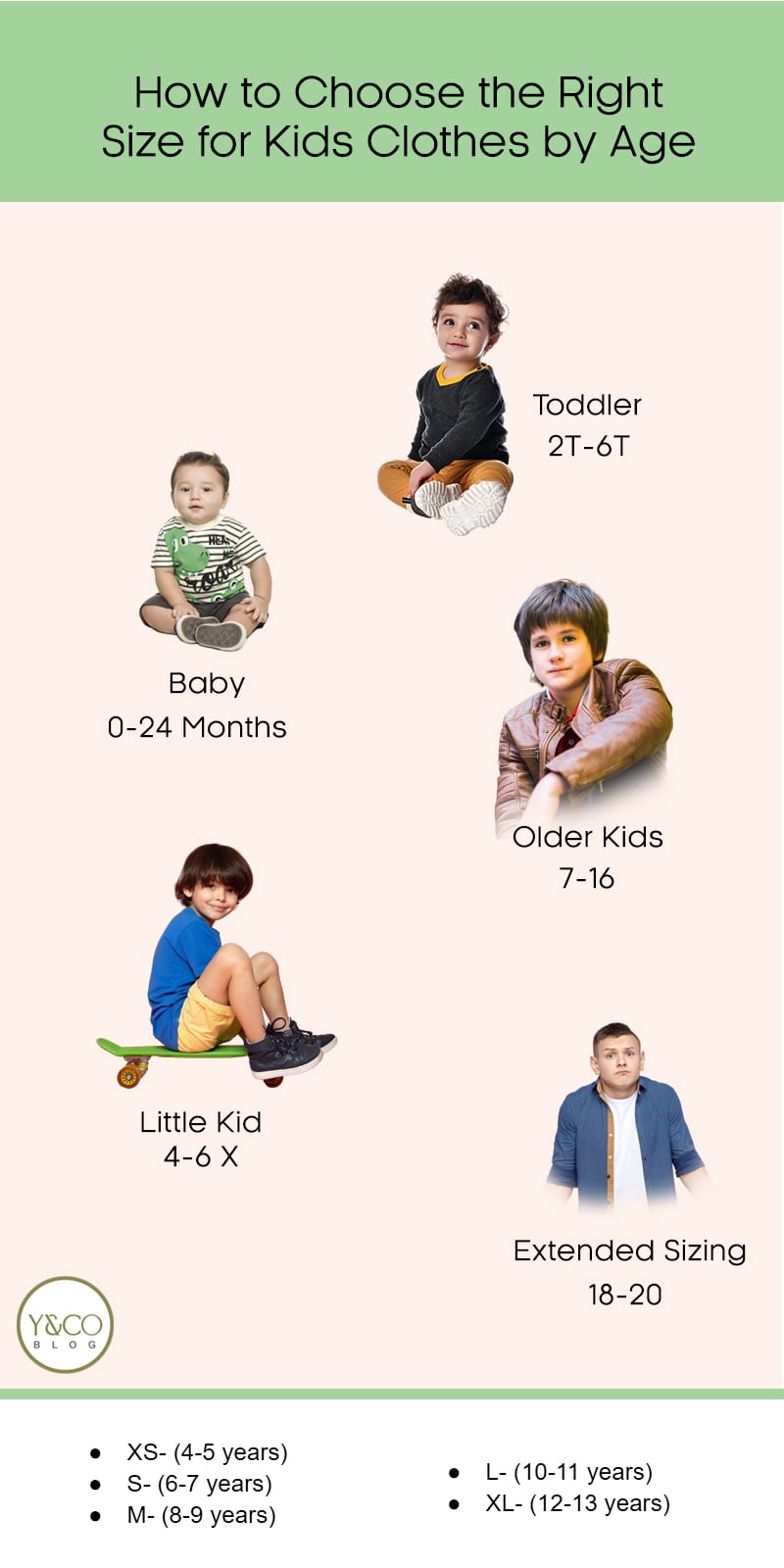
If we breakdown child wear sizes by age, here’s what it looks like:
–Newborn size is referred to as NB (for just-born babies)
-Infant size is labeled by months (0-3, 3-6, 6-9 months for example)
-Toddler size is decided by years (2T for 2-year-old, 3T for 3-year-old, etc)
However, the average size categories for kid’s attire across retailers are as follows:
| Age Group | Size Category |
| Baby | Preemie, 0-24 months |
| Toddler | 2T-6T |
| Little Kid | 4-6X |
| Older Kids or Tweens | 7-16 |
| Extended Sizing | 18-20 |
And if the manufacturers follow the same sizing standard as adults, the interpretation of kids’ outfits usually looks like below:
- XS- (4-5 years)
- S- (6-7 years)
- M- (8-9 years)
- L- (10-11 years)
- XL- (12-13 years)
Baby Clothes Size Chart by Months, Weight, and Height
Here’s a general clothing guide for babies by their age, height, and weight:
| Size | Weight (lbs) | Height (inches) |
| Preemie | Under 4 | Up to 16 inches |
| Newborn | 4-8 | 17-21 |
| 3 Months | 9-11 | 22-24 |
| 6 Months | 12-14 | 25-27 |
| 9 Months | 15-18 | 28-29 |
| 12 Months | 19-21 | 30-31 |
| 18 Months | 21-23 | 32-33 |
| 24 Months | 24-28 | 33-34 |
Toddler Clothing Size
Toddler clothing size ranges from 2T-5T (usually) where the T stands for Toddler, and the number refers to the child’s age in years.
Here is a standard size chart for toddlers based on their average height and weight:
| Size | Weight (lbs) | Height (inches) |
| 2T | 28-31 | 33-36 |
| 3T | 31-33 | 36-38 |
| 4T | 34-37.5 | 39-41 |
| 5T | 37.5-42 | 41.5-44 |
Note: For toddlers, you will sometimes find clothes labeled as 3, 4, or 5 without a T. Don’t fret; they are the same as 3T, 4T, or 5T and are meant to fit a similar age group.
Size Guide for Young Children
Children’s clothing sizes in the range of 4-6X and here’s how it varies for different heights and weights:
| Size | Weight (lbs) | Height (inches) |
| 4 | 38-40 | 41-43 |
| 5 | 40-45 | 43-45 |
| 6 | 45-50 | 45-48 |
| 6X | 50-57 | 48-51 |
Things to Remember: These labels don’t always match your kids’ actual sizes or age ranges. Sizing categories might differ due to your little one’s individual body proportions or based on specific clothing brands. Thus, measure your child first to avoid the wrong sizes in baby clothing.
Know When You Should Size Up for Kids
When buying kids’ clothes, always size up if your kid needs a size in between. Because babies grow in a blink, sizing up saves you from a sudden wardrobe disaster (imagine having a wardrobe full of outgrown baby clothes).
Aside from that, the following situations require sizing up for kids’ clothes:
- If your child is on the verge of a growth spurt, choose garments that are one size bigger
- If a size feels just too tight for your kid, sizing up will allow them comfortable fitting
- Buying sweaters/jackets? These layering pieces must be a bit larger as your child will wear them over other clothes
- Check for the materials of kidswear before buying. If there’s a chance of shrinking, always buy one size bigger.
- Sizing up is also recommended for slim-fit clothes to ensure enough room for your kid’s growth.
How to Measure a Child for Clothes: Step by Step
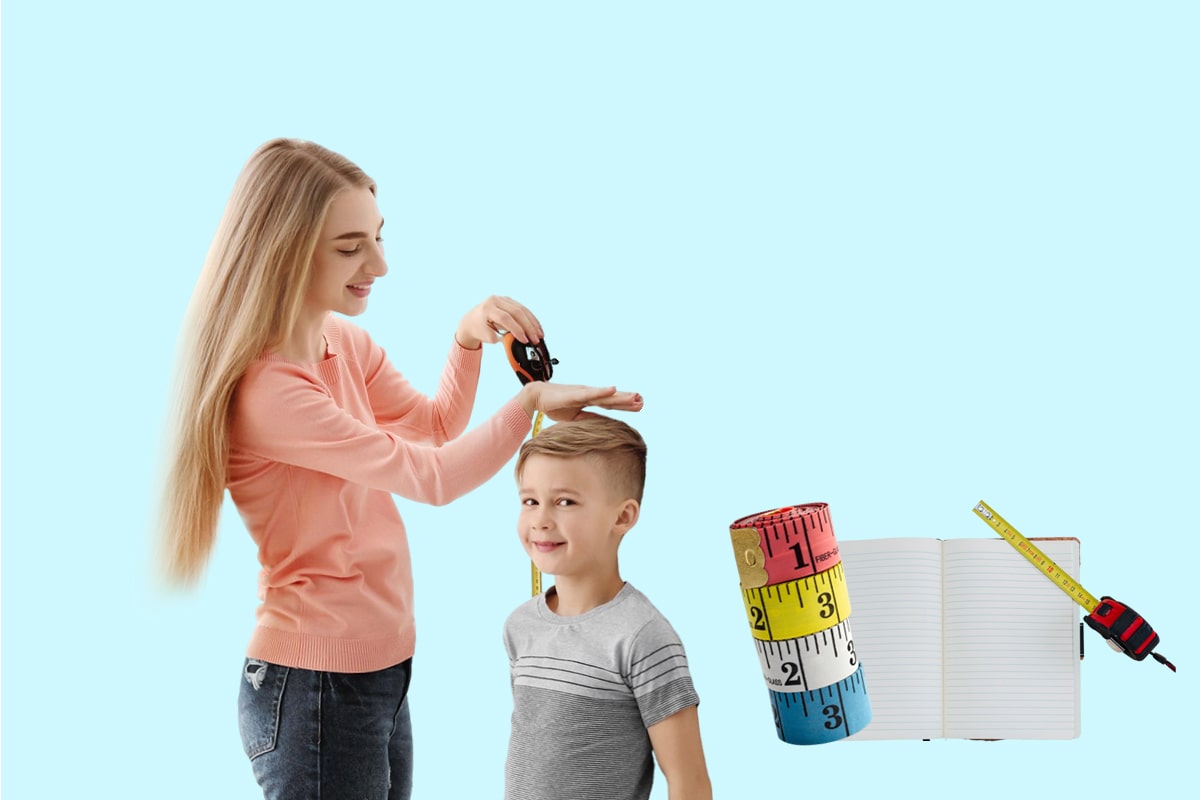
Proper measurement is the key to finding the right fit whether it’s for kids or adults. Here’s how you should measure your child in the right way:
Step 1: Get a measurement tape
Step 2: Take measurements of the child’s height, chest, hips, waist, and inseams
Step 3: Note down the measurements on a notepad
Step 4: Study each brand’s specific size guide and match them with the measurements of your kid.
Step 5: In case you are visiting stores, take the help of the salesperson and get measured for the clothes you intend to buy.
For proper clothing sizes, measure the following areas as described:
Height: For actual measurements, make your kid stand tall and measure from the floor to their heads. However, for newborn babies, make them lie flat and take measurements from head to toe.
Chest: Take measurements around the fullest part of your kid’s chest, placing the tape snugly under the arms.
Waist: The measurement should be around the natural waistline, above the belly button.
Hip: Keep the tape straight and measure snugly around the fullest part of their hips.
Inseam: Take measurements from the top of the inside of the leg to the ankle bone.
Quick Tip: Alternatively, you can measure a pair of pants that just fit your child right. Lay the pants flat, and measure along the inseam from the crotch to the bottom of the leg hem.
How Long Does A Size Fit for Kids?
Honestly speaking, it doesn’t matter what works for others because it’s not going to work for you. Babies are super different, especially in the growing phase of life.
That’s why a child can wear newborn clothes for the first 3 months, while another one can outgrow them in a week or two.
So, it comes down to every child’s individual height, weight, and growth rate which determines how long they will fit in a particular size.
Tips to Buy Kids’ Clothes in the Right Size
- Analyze the size guide for kid’s clothes as sizes between brands are never consistent.
- Stick to a favorite brand that fits your child perfectly.
- Look for adjustable waistbands that make child clothing more flexible and forgiving.
- Shop in advance for the next size so that your child never falls short of the right size clothes.
- Shop in different sizes at a time to keep your kid’s closet ready to tackle their sudden growth spurt.
- Try thrift stores/swapping to save a significant amount on kids’ wardrobe budget.
- Read reviews before you buy if the clothes run bigger, smaller, or true to size.
- Know how to deal with shrinkage, especially for cotton clothes as they are supposed to shrink after washing
- Track your kid’s size every few weeks to measure their growth and shop for clothes accordingly.
Buying Kids’ Clothes Online VS Offline
Online and offline shopping for kids‘ clothes both have their share of advantages and disadvantages. Here are the things to remember in both cases:
Online Shopping: The benefits of buying kids’ clothes online are countless, whether it’s about having more choices, or offering better prices. Plus, you don’t need to stand on those big lines in front of the cash counter. However, it doesn’t allow you to try clothes before buying. So, there might be sizing issues if you don’t analyze the sizing chart thoroughly.
Offline Shopping: Offline shopping for baby clothes comes with the convenience of examining the clothes physically. So, you can expect a better fit for your kid. However, it’s too tiring and time-consuming to visit malls physically. Imagine driving for hours to shopping malls only to go through a baffling parking battle. How boring does it sound?
How Does European Baby Clothes Size Work?
The European sizing standard makes it harder for busy parents to choose their kids’ everyday wear. Because it differs from the age-based size chart and offers clothes based on children’s heights, that too in centimeters.
For example, if you see a label saying 50/56 on a piece of clothing, it is designed for kids between 50 and 60 cm tall. Thus, European clothing size has nothing to do with kids’ age but with their measurements.
Nonetheless, parents nowadays need a fair share of knowledge of all sorts of sizing as many international brands ship their products globally.
How Many Baby Clothes Do I Need in Each Size?
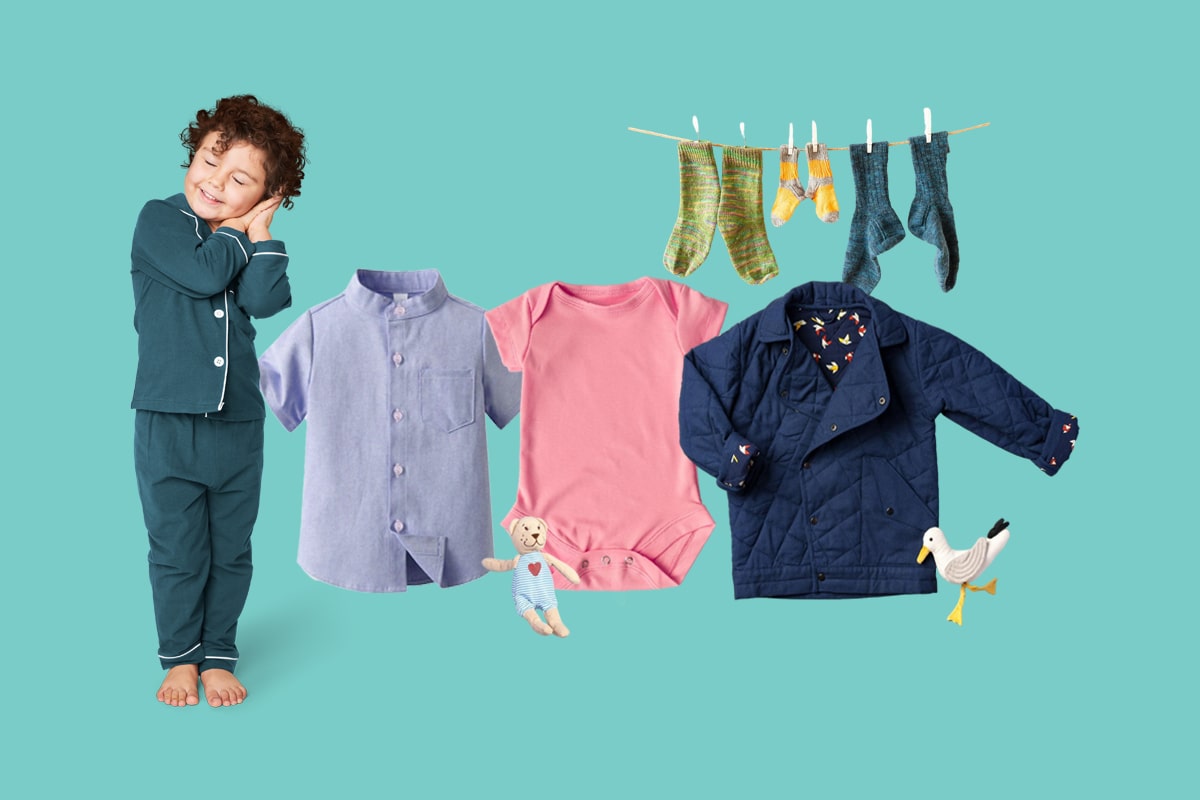
For first-time parents, it’s quite natural to wonder how many baby clothes to buy in each size. Though a newborn can go through 3-4 outfits per day, it’s always better to have a few more backups.
Moreover, babies tend to outgrow clothes pretty fast. So, if you have a newborn at home, try buying a few dresses in the newborn size and the rest in the size for 0-3 months.
Here’s a rough estimation of how many clothes you need for a baby in the newborn stage (in different styles):
- Shirts: 4-8
- Footed pajamas: 5-7
- Onesies: 4-8
- Two-piece sets: 2-4
- Rompers: 3-6
- Seasonal outfits: 2-3
- Socks/booties: 4-6 pairs
- Sweaters+snowsuit: 1 each (for winter babies)
- Swimsuits: 1 (for summer babies)
Hope this rough chart helps new parents to decide on their little one’s basic outfit needs without overspending on baby clothes.
What’s the Difference Between 2T and 24 Months?
One of the biggest baby clothing mysteries is, is 2T the same size as 24 months?
The answer is, that they differ in style, nothing else. The sizes for 24 months mainly aim at babies who are still in their diapers.
On the other hand, 2T is the toddler size for 2-year-old kids who are potty trained. Naturally, clothes for a 24-month-old are a bit roomier to accommodate diapers.
However, baby clothes in 2T size are on the leaner side as toddlers are shaped differently by losing baby fat (as they tend to get more active).
FAQs
What size is 140 in children’s clothes?
A size 140 in children’s clothing refers to 9-10 years in UK/US size. It is designed for kids with an average weight of 32-35 lbs and a height of 34-38 inches.
What size is 6t in youth?
A dress in the size 6t is designed for 6-year-old toddlers where the number refers to their age, and the “t” stands for toddlers. Generally, it works for kids who weigh around 45-50 (maximum 53) lbs, and have a height of 45-48/49 inches.
What size is 100 in children’s clothes?
A size 100 refers to kids’ clothes designed for children who are 100 cm tall (according to European sizing standards). However, in the US size chart, it means children of 3-4 years can wear size 100. The average weight for this sizing is 31-38 lbs, and the size range is up to 39-40 inches.
Is it better to buy a size bigger or smaller?
When in doubt, always size up– this is a general rule of thumb in kids’ clothing. Because babies grow quite faster, you shouldn’t waste money on too-tight clothes that will be outgrown in a while. Plus, tight-fitted clothes restrict your child’s movement without providing them enough room for natural development.
What size does a 7-year-old wear?
If the manufacturers’ size guide follows the letter-based standard (XS-XL) for kids, a 7-year-old needs clothes in size S (small).
How to choose the right size for kids clothes should sound much easier now with the guide above. Truth be told, parents find it really tough to dress children due to their varying growth spurts. Plus, kid’s fashion trends keep changing every year. So, it’s better to study the latest trend in kidswear to avoid being a fashion faux pas.
However, if the fit isn’t right, forget about happy and confident kids. So, choosing kids’ clothes, both online and offline should focus on proper sizing first, and everything else later.


[…] clothes should do more than just look cute in photos. The right clothes let your child play and explore without anything slowing them down. Small choices make a big […]